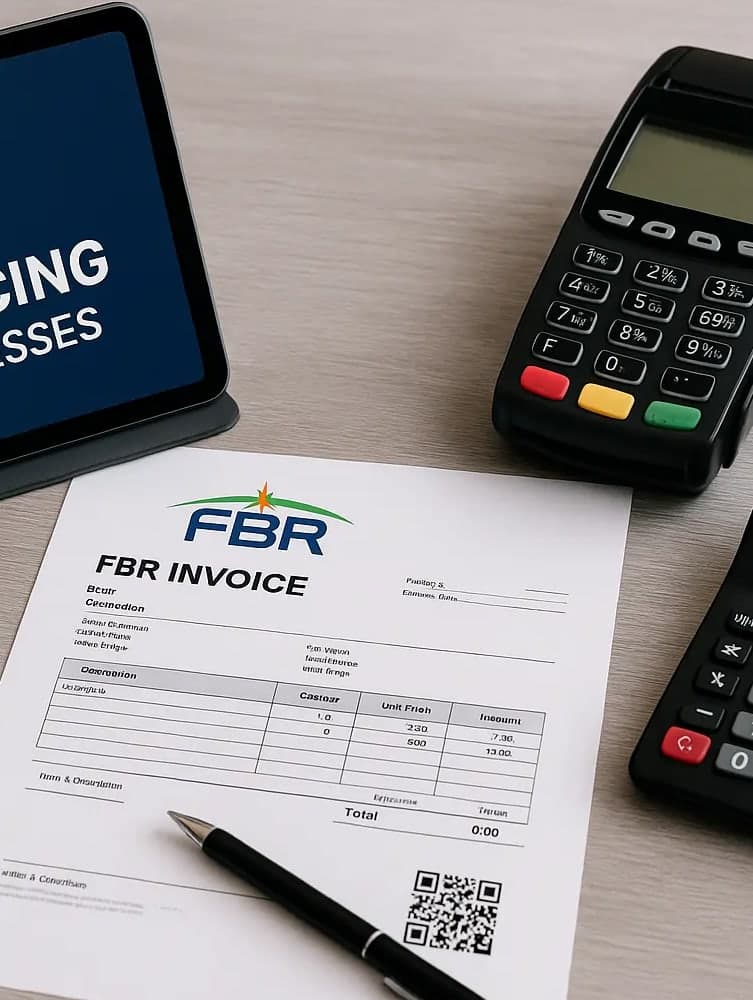


FBR e-invoicing is easier when the groundwork is done before the first live invoice. This checklist covers what to confirm. It is general guidance, not legal or tax advice. Confirm current requirements for your business with your tax advisor or the authority.
1. Business and registration details
- Your registered business name, NTN and address are correct and consistent everywhere they appear.
- Each branch or outlet that issues invoices is identified.
- The person responsible for tax filings knows who maintains the integration.
2. Item and tax setup
- Every item has a clear description and the correct tax treatment.
- Tax is calculated per line item, not guessed from the invoice total.
- Exempt, zero-rated and standard-rated items are set up separately.
- Units of measure are consistent, for example pieces versus cartons.
3. Invoice and receipt format
- Invoices carry the fields the authority expects.
- Counter receipts are printed in the required format.
- Returns and credit notes follow the same reporting path as sales.
4. Counter behaviour
- Staff know how discounts and exemptions are entered, and who is allowed to apply them.
- There is a plan for what the counter does when the internet is unavailable, and for reporting once it returns.
- Shift closing is part of the daily routine.
5. Reconciliation
- Reported invoices can be matched to sales and ledger entries.
- Someone reviews rejected or pending invoices daily, not monthly.
- Sales tax figures in your books match what was reported.
Why the checklist is shorter with one ledger
Several of these items exist because the POS and the books are separate systems. When sales, stock and the ledger share one record, tax is calculated once, invoices are reported as they are issued and reconciliation is a check, not a project.
Want to walk through your own setup? Talk to our team.