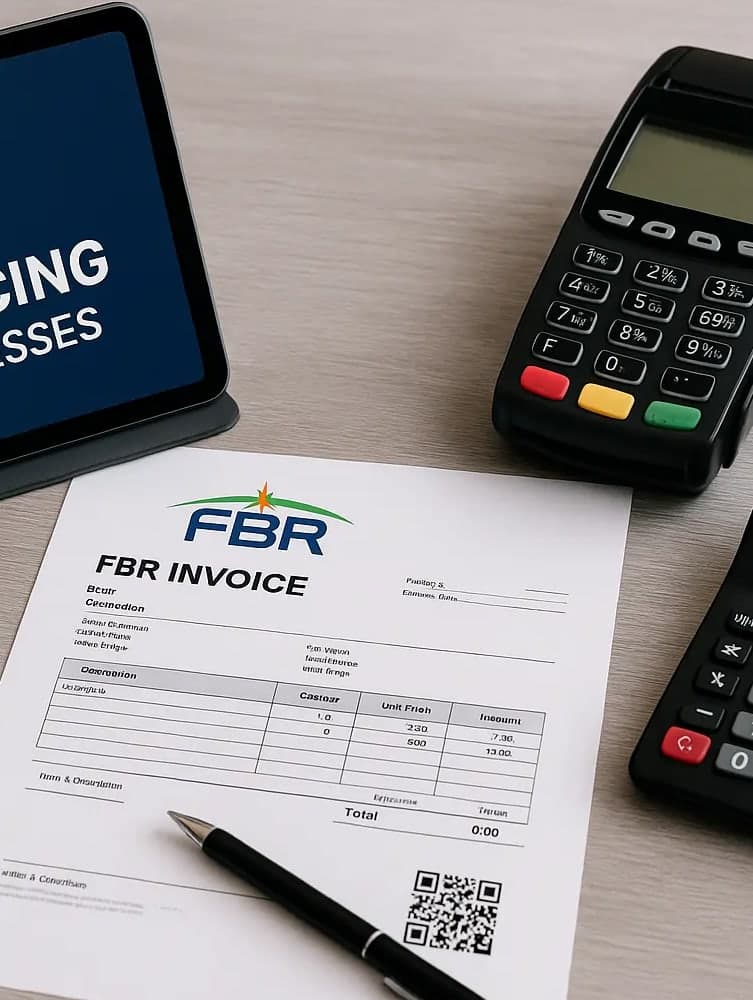


If you sell in Pakistan, you've probably heard some version of the same pitch: "FBR integration is simple. Just connect your system and you're compliant." In practice, it's simple once it's set up correctly. Getting there is where most businesses trip up.
What FBR e-invoicing actually requires
At a basic level, FBR-integrated invoicing means every qualifying sale is reported electronically, in the format the tax authority expects, at the time of sale. It isn't batched up and uploaded later. That sounds like a small technical detail, but it changes how your point-of-sale and accounting systems need to behave:
- Every invoice needs a consistent structure the FBR system will accept without manual correction.
- Tax calculations (including GST) need to be accurate at the line-item level, not just the invoice total.
- Reporting needs to happen in real time, which means your POS and your books can't be two separate systems that sync "eventually."
That last point is the one businesses underestimate most.
Where manual processes break down
We've talked to retailers who handle this by exporting sales at the end of the day and uploading them separately. It works, right up until:
- A busy day means the export gets delayed, and now you're reporting late.
- A staff member enters a discount or tax exemption slightly wrong, and it doesn't get caught until reconciliation.
- Two systems (POS and accounting) disagree on a number, and nobody notices until month-end.
None of these are dramatic failures on their own. They're the kind of small, recurring friction that adds up to hours of manual cleanup every month, and now and then a compliance headache you didn't see coming.
What "automatic" should actually mean
When we say FBR compliance is automatic in Balansa, we mean three specific things:
- Every sale at the counter is reported in real time. There's no separate export-and-upload step.
- Tax is calculated at the point of sale, using the same rules your accounting module uses, so there's no gap between what the receipt says and what your books say.
- The invoice format is generated correctly the first time, because it's built into the system rather than bolted on afterward.
Compliance doesn't become invisible. It just stops being a separate task your team has to remember to do.
The real question to ask a vendor
If you're evaluating any system for FBR compliance, the question that matters isn't "do you support FBR integration?" Most do, on paper. The question is: does a sale at the counter and the FBR report of that sale come from the same transaction, or from two systems that have to agree with each other afterward?
If it's the second one, you don't have automatic compliance. You have two systems that need someone to keep them in sync.
Curious how this looks for your own setup? Talk to the Balansa team and we'll walk through your current invoicing process together.